RATING MODEL
How CIR Evaluates Battle Impact
The Combat Impact Rating does not treat battle performance as a single number, but as the interaction of several impact areas. The goal is to make a player's actual impact in battle easier to understand.
Data Collection Through the CIR Mod Client
A dedicated CIR mod client is required to collect calculation-relevant battle data. It observes relevant battle events, records the data needed for later evaluation and reads available overall results after the battle.
The mod client is intended exclusively for data collection and later evaluation. It does not interfere with the battle, does not alter game mechanics and does not provide gameplay advantages. It only uses information that is already available to the game client during or after the battle.
The technical implementation is designed to align with Wargaming's Fair Play rules.
More Than Individual Raw Values
Individual battle values such as damage, kills, survival or support only show part of a player's performance. For CIR, the decisive factor is the context in which these values were achieved and whether they created real impact on the course of the battle.
The rating model therefore treats battle performance as the interaction of several performance areas. Factors such as vehicle role, battle situation and actual impact in the match all play a role.
A very strong value in a single rating area does not automatically result in a high final value. What matters is the overall impact across multiple areas and whether the performance matched the respective role and battle situation.
The Four Rating Areas
The CIR rating model is based on four central impact areas. Together, these areas form the foundation for a later role-based rating.
The four pillars are divided into Damage Efficiency, Armor Efficiency, Assist and Tactics.
The Individual Pillars at a Glance
The rating is fundamentally oriented around the vehicle roles in World of Tanks:
For the CIR rating system, light tanks are separated from the versatile role and treated as their own role, because their battle task is more strongly based on scouting, information gain and tactical support.
Artillery vehicles are currently not included in the CIR rating. Due to their unique playstyle, they require a separate role evaluation, which will be implemented in a later development step.
Notice on the Current Version
The displayed rating areas and impact parameters reflect the current development status of the CIR system. Until the full release, content, naming and individual rating aspects may still be adjusted, expanded or refined.
Simplified Structure Model
Xₙ = F(E₁, E₂, etc.| C)
- Xₙ = respective rating area
- E₁ etc. = pillar-specific impact groups
- C = role, vehicle and battle context
This model shows in simplified form that each pillar consists of several impact groups and is always evaluated within its respective context. It describes only the basic structure, not the concrete calculation.
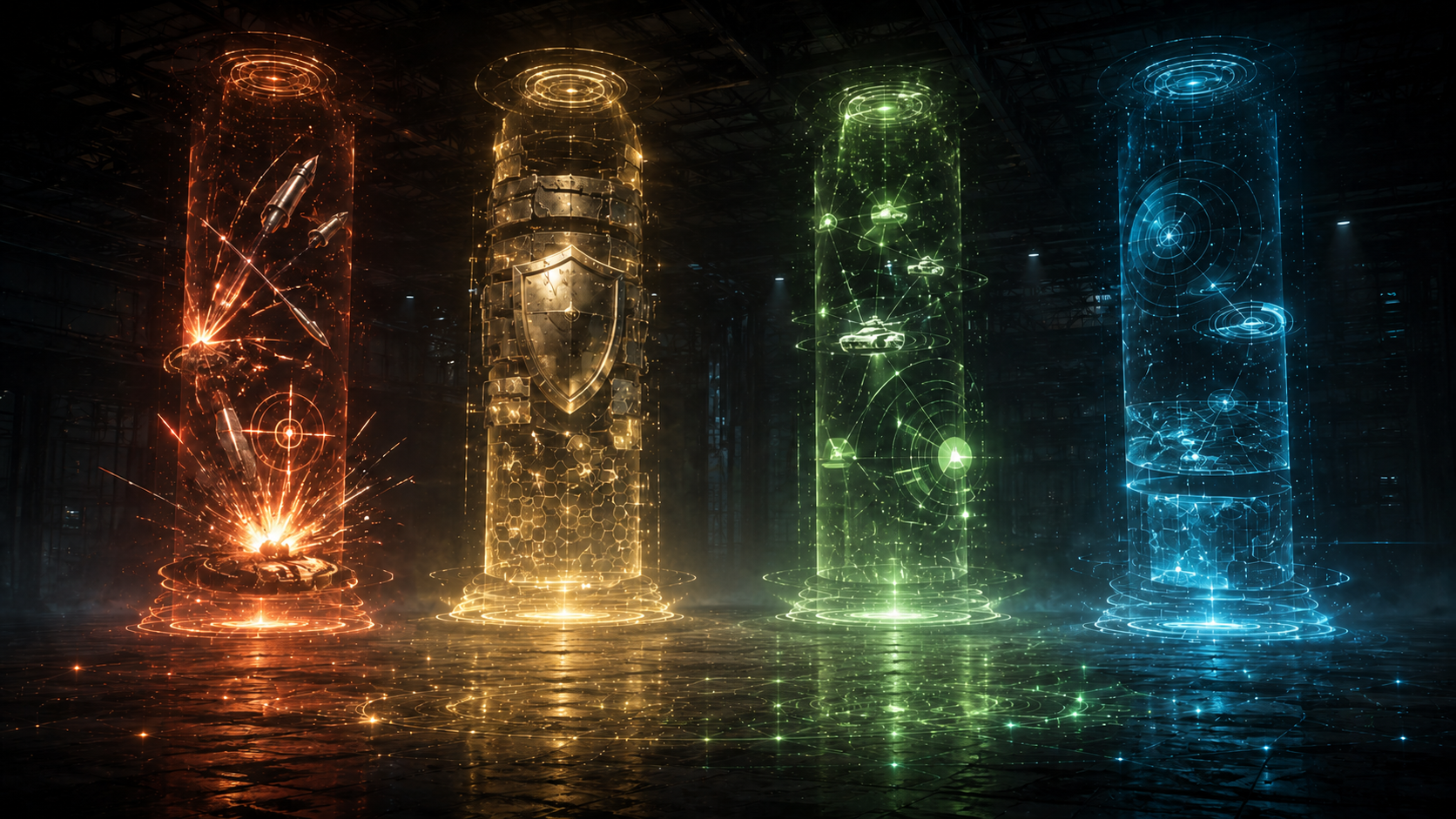
Damage Efficiency
This area does not only evaluate how much damage was caused, but how effective that damage was during the battle. The key question is whether damage was applied meaningfully and created real pressure on the enemy.
Influence parameters
- Damage Impact
- Vehicle Context
- Enemy Context
- Battle Tier
- Usage Profile
- Hit Impact
- Role Alignment
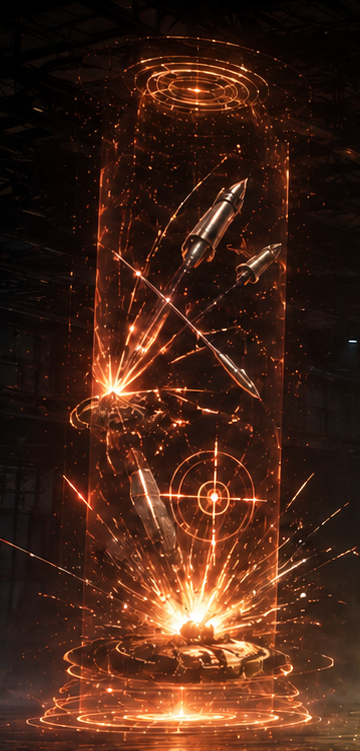
Armor Efficiency
This area looks at how effectively a player uses their vehicle defensively. This may include durability, survivability, avoided threats and meaningful use of the vehicle's armor.
Influence parameters
- Defensive Impact
- Survival Context
- Threat Context
- Vehicle Stability
- Armor Usage
- Damage Avoidance
- Role Alignment
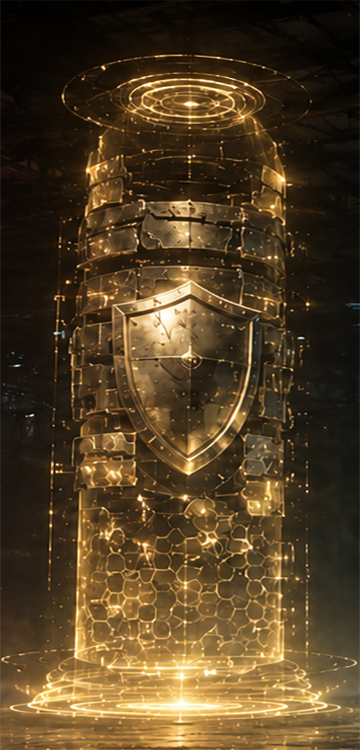
Assist
Assist describes impact through scouting, support and enabling actions for the player's own team. Not every important contribution is directly created through personal damage.
Influence parameters
- Spotting Impact
- Support Impact
- Team Value
- Information Gain
- Enabling Impact
- Support Context
- Role Alignment
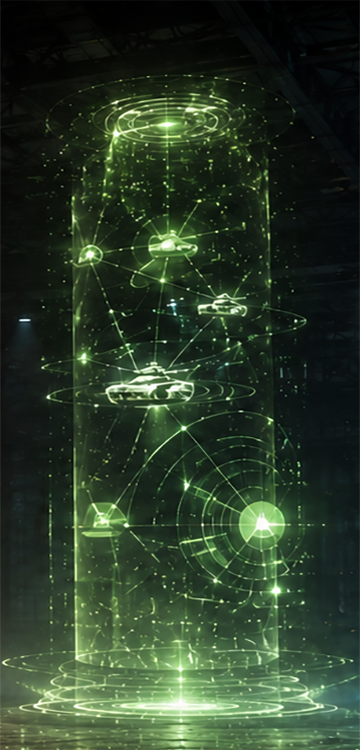
Tactics
Tactical impact is created through positioning, map control, decision-making and reacting correctly to the battle situation. This area is intended to make player impact beyond raw values more visible.
Influence parameters
- Positional Impact
- Map Control
- Decision-Making
- Objective Impact
- Timing Impact
- Battle Flow
- Role Alignment
Role-Based Rating
Not every vehicle fulfills the same task. A light tank, a heavy breakthrough tank, a tank destroyer or a support vehicle all have different roles in battle.
CIR is intended to take these differences into account and not evaluate performance by identical standards across all vehicles. The focus is on whether a player used their vehicle to create role-appropriate impact in the battle.
This does not only consider the broad World of Tanks vehicle role. Vehicles within the same role can still differ significantly in playstyle, task profile, mobility, protection, firepower or support potential. CIR is intended to account for these differences within the vehicle context, so that vehicles within their role can be assessed more fairly.
How the global CIR value should be understood
The visible CIR value is not based on a single raw statistic. Individual battles are first evaluated across multiple rating areas. This creates a visible match rating for each battle, designed to make actual battle impact easier to understand.
Very strong individual performances are deliberately not allowed to scale upward without limit. CIR therefore uses a bounded rating scale and an asymptotic curve. This keeps extreme outliers under control without devaluing strong performances.
The 10,000 CIR mark does not represent a normally achievable target value. Instead, it defines a theoretical upper limit — a representation of absolute perfection in impact and consistency. In practice, this value is expected to be approached only asymptotically and is not considered realistically attainable.
This also means that very strong players appear visually closer together in the upper rating range. A difference between, for example, 9,100 and 9,200 CIR should therefore not be interpreted as a simple linear gap. In the upper range, small visible differences may represent significantly larger differences in consistency, impact, and underlying battle performance.
The global CIR value is derived from the player’s individual battle ratings. As a result, it is not a single exceptional battle that matters most, but consistent impact across many battles. Weak or early-lost battles therefore have a visible effect on the overall average.
Whether the theoretical upper limit and the current scaling remain exactly as they are in later live operation will be evaluated during the Closed Beta. During this test phase, additional features, adjustments, or fine-tuning may be introduced to further improve comparability, transparency, and fairness.
Rating Model Notice
The displayed content reflects the current development status of the CIR system. For illustration, the rating approach can be simplified as CIR = F(Xₛ, Xₚ, Xₐ, Xₜ | R, V, T, G). The full calculation logic remains part of internal development, because exact weightings, correction factors and protective mechanisms could be deliberately exploited. CIR is therefore not meant to be reduced to individual optimizable values, but to make statpadding harder and real battle impact more visible. Instead, CIR publicly shows the rating areas, impact parameters and later traceable evaluations per battle.
Current Development Status
The rating model is currently being prepared for a closed test phase. During this phase, data collection, evaluation, traceability and comparability will be tested and further optimized.